



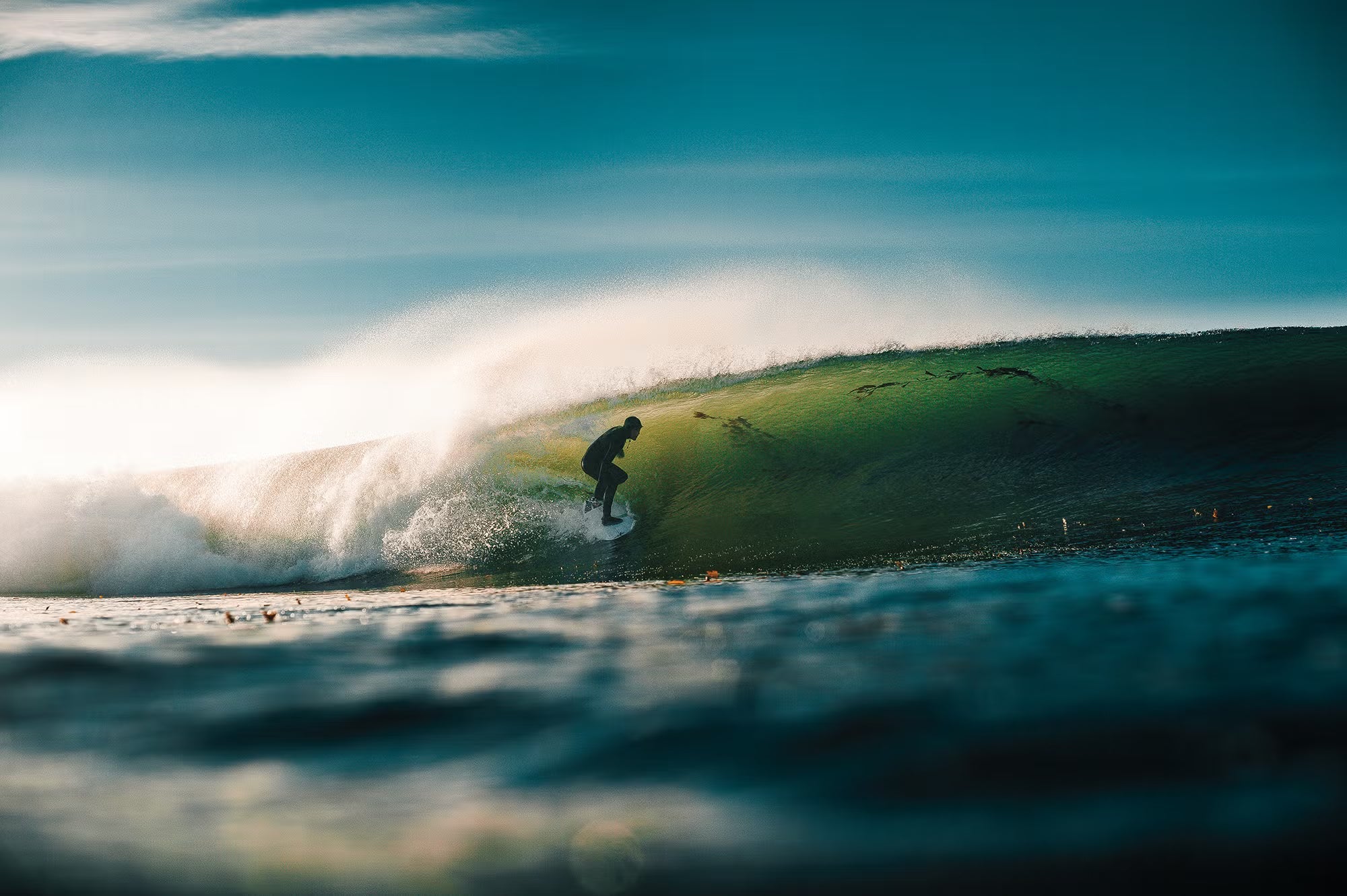
Not far from the Southern Lakes you’ll find world-class surf on both the east, west and south coasts of the South Island. There are surfers on the Outside Sports team who live in Te Anau, Queenstown, Wanaka, and Tekapo and regularly drive two or three hours in search of waves – and do it all year round. Because the waters of the South Island are chilly, a wetsuit is an essential part of your surfing gear. But how do you know which is the best one for you? Especially if it’s your first wetsuit? There’s actually quite a lot to consider – and we’re here to help!
Everything You Need to Know About Choosing a Wetsuit
First-time Surfing Wetsuit Buyer's Guide
-
How wetsuits work
-
Wetsuit thickness
-
Wetsuit seams
-
Wetsuit entry
-
The different types of surfing wetsuit
-
How to know the wetsuit thickness you need
-
How to choose the right size
-
Wetsuit care
How Does a Surfing Wetsuit Keep You Warm?
Wetsuits are made of neoprene, which is a highly flexible, stretchy synthetic foam rubber fabric. Neoprene is slightly porous and lets a small amount of water seep in to be trapped between your skin and the wetsuit. Your body rapidly heats that thin water layer and that’s why you stay warm.
Wetsuit Thicknesses
Generally the thicker the wetsuit, the colder the water you can use it in. The thickness of the neoprene in a wetsuit is expressed in mm – usually between 2mm and 5mm. You’ll see two numbers written on the sleeve of wetsuits such as - 5/3. That means the body of the wetsuit is 5mm neoprene, and the arms and legs are 3mm. Other common thicknesses for South Island wetsuits are 3/2 and 5/4. You might even see 5/4/3. That means the wetsuit has a 5mm body, 4mm legs, and 3mm arms.
Here’s a handy temperature guide from Xcel Wetsuits that will help you choose the right thickness for where you’re surfing. In the summer the South Island has water temperatures from a maximum of about 20 degrees to around 15 way down South. In mid-winter it gets as cold as 8 degrees and no warmer than around 14. As rule of thumb the west coast is warmer than the east and south coasts because of the warm Tasman Sea current.
Wetsuit Seams
The neoprene itself will let some water seep in, and more water can be let in by the seams because the neoprene is perforated by the stitching, or is it?
Flatlocked Seams
The cheapest wetsuits have flatlocked seams where the stitching goes all the way through the neoprene. This type of stitching is really only appropriate for very thin wetsuits where the main objective is protection from the sun and being banged by your surfboard or the bottom of the surfbreak, say a coral reef. Kids’ summer wetsuits are often flatlocked to keep the cost down and because they don’t feel the cold so much.
Glued and Stitched Seams
With a glued and stitched wetsuit, the pieces of the wetsuit are glued together and then stitched, but the stitch doesn’t go all the way through the neoprene, so the water doesn’t have a channel to flow through. That’s called ‘blind stitching’ and you’ll often see mid-priced wetsuits with that.
Glued, Blind Stitched, and Sealed Seams
Commonly called GBS this is the premium form of seaming which is very effective in blocking water entry via the seams. Once the seams are glued and blind stitched sealing tape is laid over the seam to seal it.
Entry type
Now we’re really getting into the weeds. There are three different ways you can get into and close a wetsuit.
Back-Zip
This is the traditional way and is the easiest for getting into and out of – but back zips do let in a bit of water and the water seal at the neck is never perfect.
Chest-Zip
With a CZ you get into the wetsuit through a hole in the shoulders, a little like getting into a sleeping bag. There’s a flap that forms the neck which comes over the top of your head and then gets zipped to the chest of the wetsuit. They take a bit of practice to put on and get off, but you’re rewarded with an effective water seal. Most serious winter wetsuits are CZ with GBS.
Zip Free
This is a high-end closure feature and the zip is replaced by a super stretchy flap which seals against itself. Zip Free wetsuits need to use the stretchiest neoprene available, which tends not to be so durable – most only last a couple of seasons before they go a bit baggy, which makes them an expensive option. But the performance while they’re new is amazing.
Wetsuit Types
Full Wetsuits
Surfers call a full wetsuit with long arms and long legs a ‘steamer’ maybe because of the steam that rises from them when you take them off after a session. Steamers come in a range of thicknesses. For summer a 3/2 will see you right in most conditions and for winter most people go for a 5/4 - often paired with booties and a hood – and sometimes wetsuit gloves.
Spring Suits and Shorties
Spring suits are short armed and long-legged wetsuits usually in 3/2 or 2/2 thicknesses. Shorties have short arms and legs. A spring suit or a shorty might suit you if you only plan to surf on warm days in summer in the South Island. In the North Island you’ll spend a lot more time in them. Most surfers who have spring suit or shorties, also have a steamer or two as well.
How Do You Know a Wetsuit is the Right Size?
A wetsuit should feel like a second skin. You will forget you’re wearing a wetsuit that fits properly. It shouldn’t be too tight so that it restricts movement, but not too loose so that too much water gets in. A wetsuit that’s too loose can also create chafing in the armpits which is torture. Height-wise the knee pads should sit level with your knees, and the cuffs should be nice and snug at your wrist and ankles. Most wetsuit sizes come in short, average, and tall variations, which end up working for most people.
Speedo type briefs for guys and bikinis for girls seem to be the most popular wetsuit underwear – but lots of people prefer the feeling of wearing nothing under their wetsuit. Boardshorts will make even the best wetsuit feel weird.
Caring for Your Wetsuit
Your wetsuit will last longer if you treat it well. Rinse it with a hose inside and out after every surf, and if it gets dirty you can give it a little bath by hand in a mild detergent. Hang it up to dry on a thick plastic hanger not a wire hanger, and don’t leave it out in the sun because UV is neoprene’s worst enemy.
Premium Brand Wetsuits at Outside Sports
We are proud to stock three of the world’s leading wetsuit brands at Outside Sports. We have O’Neil, who invented the surfing wetsuit. Xcel who specialise in extremely flexible wetsuits. And Picture Organic women’s wetsuits, which are made with sustainable fabrics and feature beautiful floral patterns that bring colour to the lineup, which is usually just a boring sea of black or grey neoprene.