



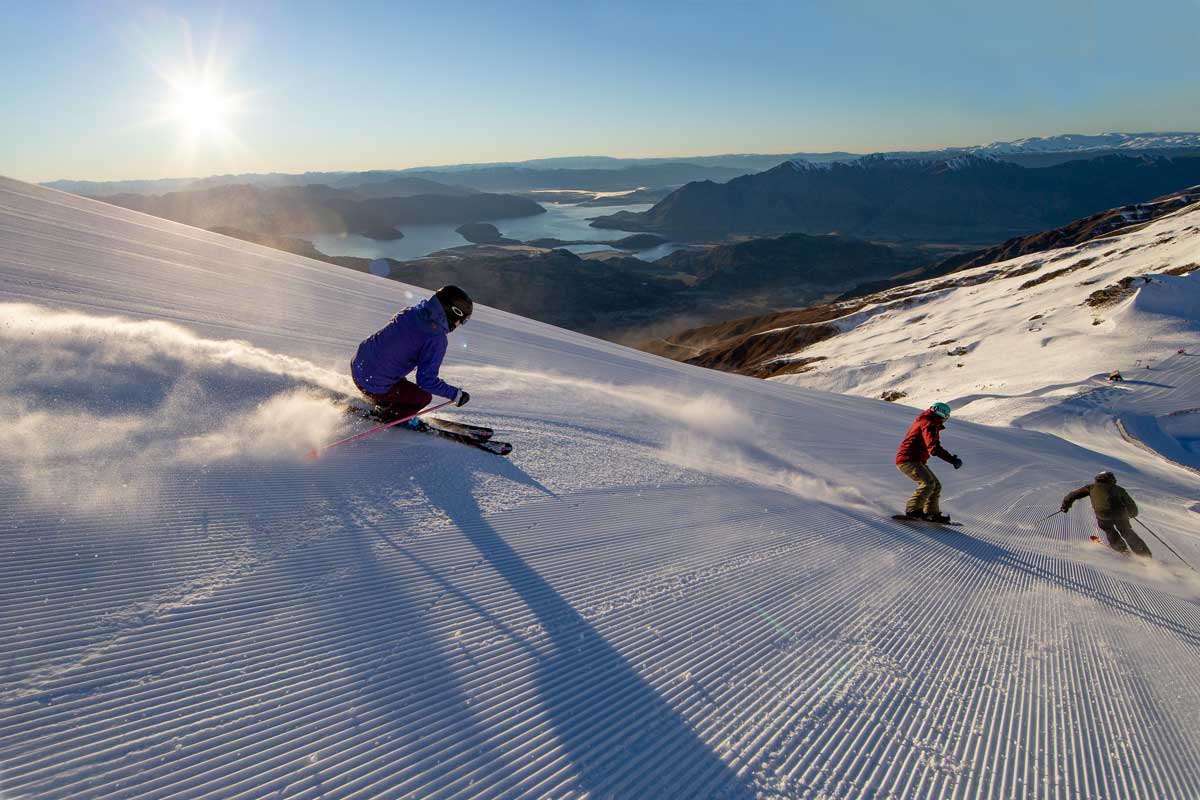
New Zealand snow conditions are genuinely tough on gear year-round. Early and late season, thin coverage means edges regularly make contact with rocks and hard ground. Mid-season, the South Island's resorts serve up a mix of icy groomed runs, abrasive machine-made snow, and high-altitude hard pack, all of which dull edges faster than the softer European or North American snow most instruction videos are written for. Come spring, wet heavy snow strips wax faster than mid-winter conditions, so you may find yourself needing to re-wax more frequently than earlier in the season. At every point in the season, there's something working against your gear. Knowing how often to service it here isn't just about performance, it's about making your skis or board last.
How Often Should You Service Your Skis or Snowboard in NZ Conditions?
The General Rule
As a starting point: wax every 3–5 days on snow, and get a full service (base grind, edge tune, and wax) at least once a season. But NZ conditions mean that rule needs adjusting depending on when and where you're skiing.
Skis: How Often is Often Enough?
For recreational skiers getting out 10–20 days a season, one full service at the start of the season and a wax top-up every 3–5 days is a reasonable baseline. If you're skiing hard pack or ice regularly, which is common at Coronet Peak and on the lower runs at Treble Cone, bump that edge tune to every 6–8 ski days rather than waiting for the end of season.
A quick at-home test: run your fingernail across the edge at a right angle. If it slides without catching, the edge is dull and needs sharpening. For the base, look for white, dry patches or visible scratches, as that's a sign wax isn't penetrating properly anymore.
Technically speaking, a sharp edge should be filed to a specific bevel angle, typically 1–2 degrees on the side edge and 0.5–1 degree on the base edge for all-mountain skiing. A steeper side bevel (2–3 degrees) gives a more forgiving feel for beginners, while racers often run 0.5 degrees base and 2–3 degrees side for maximum grip. These angles matter more than most recreational skiers realise, and getting them set correctly at a workshop makes a real difference on firm NZ snow. For a full breakdown of what's actually involved in each type of service, our guide to ski tune vs wax vs full service explains it well.
Snowboards: The Same Rules Apply, With a Few Differences
Snowboards cover more base surface area than skis, which means wax tends to last a little longer per session, but the edges take a different kind of punishment. Riders who spend time on rails and boxes will dull and chip edges far faster than those sticking to groomed runs or powder. If you're riding park, inspect your edges after every session and expect to detune or sharpen more frequently.
For all-mountain and freeride boarders, the same 3–5 day wax rule applies. A full service once a season is the minimum, but if you're riding more than 15–20 days in a NZ winter, a mid-season service is worth it, particularly if you notice your board tracking less cleanly or feeling slow on flat sections.
One thing specific to snowboards: base flatness matters more than most riders think. A convex base (known as "railed") makes edge-to-edge transitions feel sluggish, while a concave base ("dished") creates unpredictable catching. A stone grind corrects both and is something a good workshop will check as part of a full service.
Seasonality: A Rough NZ Service Guide
Start of season (June/July): full service before your first day, no exceptions. Even if your gear was freshly serviced at the end of last winter, a season in storage can leave edges with surface rust and bases in need of a fresh wax. A light rust removal and re-wax at minimum.
Mid-season (July/August): wax every 3–5 days. If you've had a rock strike, get the base repaired before it worsens, as small gouges become big ones fast. Edge tune if grip starts to go, typically every 6–8 days on hard snow.
End of season (September/October): spring snow is wet and heavy and strips wax faster than mid-winter conditions. Get a full end-of-season service before putting gear into storage. Leaving a thick layer of storage wax on the base protects it over the off-season, and you can scrape and brush it off at the start of next winter.
Storing Your Gear Between Seasons
Keep gear in a dry environment away from temperature extremes. If your edges have any surface rust going into storage, a light pass with a gummy stone before you pack them away will save you time come opening weekend.
When to DIY and When to Go to a Workshop
Hot waxing at home is straightforward and worth learning. It's cheaper, faster, and you can do it the night before a big day. Our VOLA tools guide covers the process, and we stock a full range of wax and snow tools online and in store if you want to get started
Edge tuning with a file is manageable for minor touch-ups, but base grinds require a stone grinding machine and should always be done by a technician. If you're not sure what your gear needs, most workshops will take a look and give you an honest assessment. You can book your skis or board in with our workshop in Wanaka or Queenstown and we'll tell you exactly what's needed.
For a full rundown on what each type of service involves and what to expect to pay, see our guide to ski servicing costs in Queenstown and Wanaka.