How Tight Should Ski Boots Be? The Complete Guide to Ski Boot Fit
One of the most common questions in skiing — and one that's surrounded by more myth than almost any other topic on the mountain.
Ask ten skiers how tight their boots should be and you'll get ten different answers. Too tight and you'll lose feeling in your toes by run two. Too loose and you'll be fighting your skis all day. The truth, as with most things in skiing, lies somewhere more nuanced — and understanding it could completely change your experience on the mountain.
Why Ski Boot Fit Matters More Than Anything Else in Your Kit
Your ski boots are the single most important piece of equipment you own. More than your skis, more than your bindings, more than any other item in your bag. Here's why: your skis make contact with the snow, but your boots connect you to your skis. Every movement you make — every flex of the knee, every shift of the ankle — travels through your boots before it reaches your skis. If that connection is compromised by a poor fit, your skiing suffers regardless of how good everything else is.
When your boots fit correctly, something clicks. The energy you generate through your legs transfers seamlessly into your skis, giving you responsive, efficient, connected skiing. Most skiers who've never experienced a proper boot fit have simply never felt this — and once they do, there's no going back.
The Myths Around Ski Boot Fit
A couple of stubborn myths have been circulating in ski culture for decades, and they're worth addressing head on.
Myth 1: "Ski boots are supposed to be painful." They're not. A properly fitted ski boot should be snug and firm, but never painful. Pain is always a sign that something is wrong — either the boot is the wrong size, the wrong shape for your foot, or hasn't been properly customised.
Myth 2: "If your toes touch the front of the boot, you'll lose toenails." Not necessarily. Where your toes sit depends on whether the boot is buckled and whether you're standing in a flexed skiing stance. More on that below.
So How Tight Should Ski Boots Actually Be?
The short answer is: snug, but not painful. Think of it as a firm, confident handshake — secure and encompassing, but not crushing. The boot liner should wrap your entire foot like a well-fitted glove, with no dead space and no pinching.
Here's what a correct fit feels like in practice:
Your toes — You should be able to wiggle your toes, but not curl them. When you're standing in an unbuckled boot, your toes may brush the front. But once the boot is buckled and you flex your knees and ankles forward into a skiing stance, your heel moves back into the heel pocket and your toes should come slightly away from the front. This is normal and correct.
Your midfoot and ankle — There should be no movement at all through this area. Your midfoot should feel firmly held, with no space between the top of your instep and the ceiling of the boot. Any lift or looseness here means the boot is too big or the wrong volume for your foot.
Your heel — Your heel should be locked firmly into the heel pocket with no lift. Heel lift is one of the most common and damaging fit problems in skiing — it causes loss of power transfer, poor control, and accelerated liner wear.
Your calf and shin — The cuff of the boot should wrap firmly around your lower leg, giving you a solid platform to press against when flexing forward. Too much space here means you're losing leverage.
A good rule of thumb: the boot will feel at its tightest when you first try it on in the shop. As the liner beds in and moulds to your foot over time, it will become slightly more accommodating. So when trying boots on, err on the side of feeling well contained rather than roomy.
Understanding Boot Volume
One of the most important — and most overlooked — aspects of ski boot fit is volume. Volume refers to the amount of space inside the boot, specifically the height above the instep and the space in the toe box.
Most major ski boot brands now produce boots in three volume options:
Low volume (LV) — approximately 97–99mm last width, suited to narrow, low-instep feet.
Mid volume (MV) — approximately 99–101mm last width, the most common fit for average-width feet.
High volume (HV) — approximately 100–104mm last width, suited to wider feet or higher insteps.
Getting the volume right is critical. Too much space above the instep and around the midfoot leaves your foot moving around inside the boot — reducing your ability to steer accurately, particularly in demanding terrain like moguls or off-piste. Too little volume and you'll have painful pressure across the top of your foot that no amount of loosening buckles will fix.
An important nuance: if you have a wide foot but a low instep, you're generally better off finding a boot that fits your instep height correctly, then having a boot fitter punch out the shell to accommodate the width of your foot. Choosing a high-volume boot to solve a width problem often creates new issues in the process.
What "Too Big" Actually Feels Like
A boot that is too big is just as problematic as one that is too small — and arguably harder to diagnose, because it can feel deceptively comfortable in the shop.
Signs your boot is too big:
Your toes have enough room to curl inside the boot
You can lift your entire foot off the insole
Your heel moves laterally or lifts when you ski
The boot feels comfortable when standing still but sloppy when skiing
You find yourself over-tightening the buckles to compensate
A boot that's too big will never ski well, no matter how many custom modifications are made to it. Getting the right size and last is the essential first step.
What "Too Small" Actually Feels Like
A boot that is too small is usually easier to identify — because it hurts. But it's worth knowing the specific signs:
Your toes are jammed or curled against the front of the boot even when buckled and flexed
You feel the boot cutting into the top of your midfoot or instep
There is uncomfortable pressure on your outer ankle bone or the back of your heel
The cuff is pinching or creating pressure at the back of your calf
Some pressure during the first wear is normal as the liner begins to mould and pack out. But sharp, concentrated pain — especially across the instep or on bony areas — means the boot is too small or the wrong shape for your foot.
Why You Shouldn't Try to Solve Fit Problems Yourself
It's tempting to loosen buckles, add thick socks, or simply push through the discomfort. None of these are solutions. Thick socks compress the liner and reduce blood flow, making cold feet worse. Loose buckles mean less control and more movement inside the boot. And pushing through pain means a miserable day on the mountain and potential long-term damage to your feet.
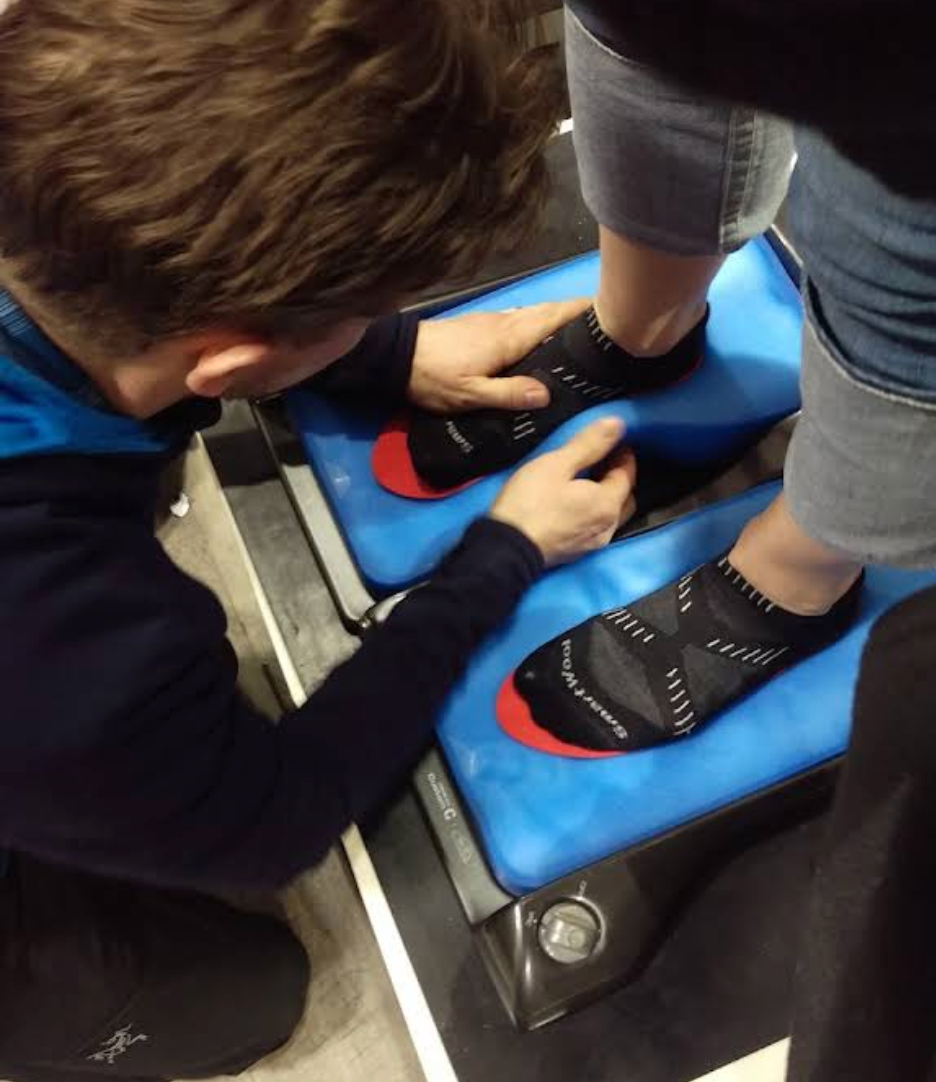
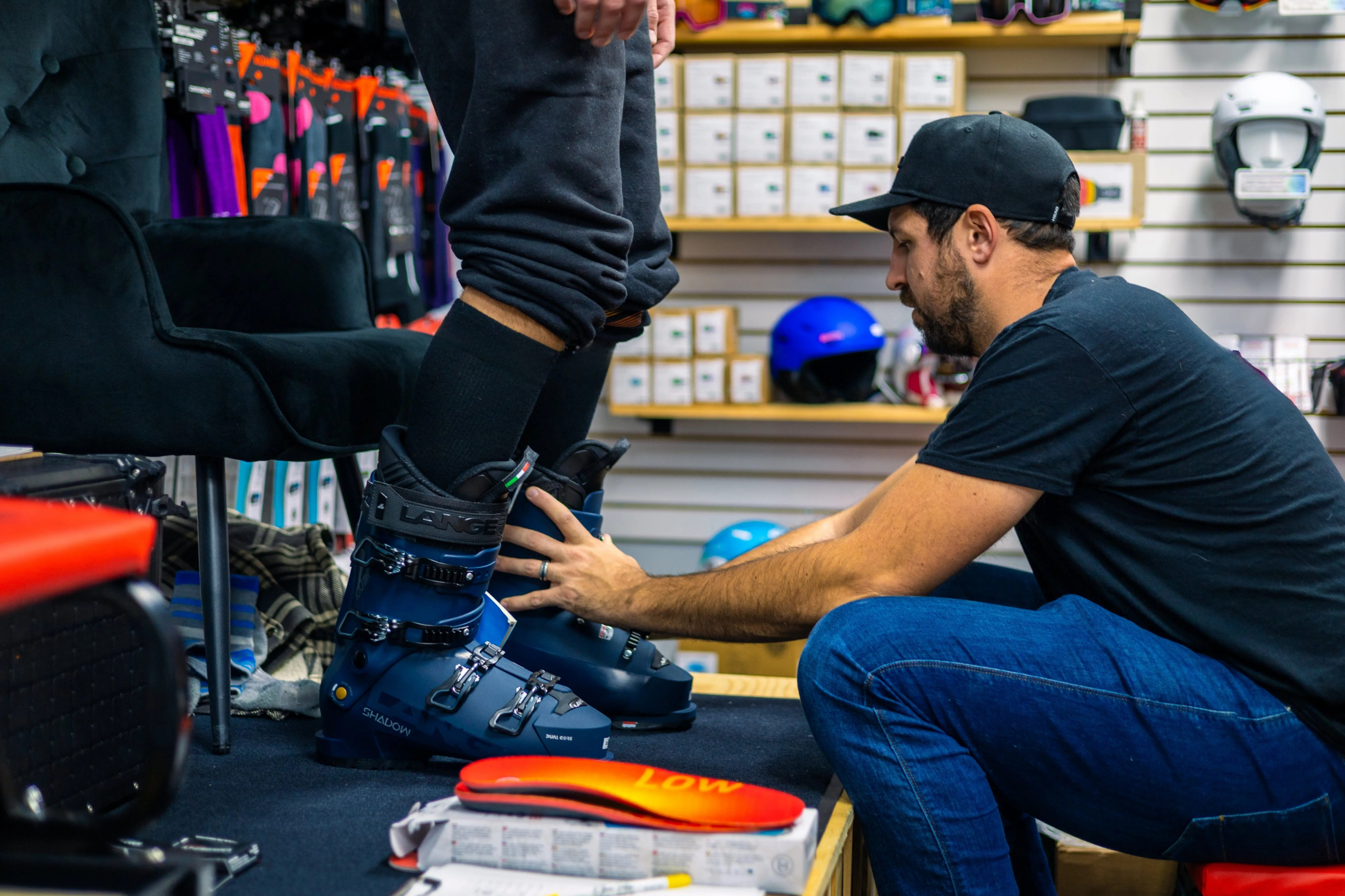
The right solution is always a professional ski boot fitting. Our expert boot fitters use the Sidas FEETBOX® EVO scanning system to precisely assess your foot shape, volume, and pressure points, then work through a comprehensive customisation process — from heat moulded liners and Sidas custom insoles to shell modifications and alignment adjustments — to create a fit that is genuinely tailored to your foot.
The Bottom Line on Ski Boot Fit
A well-fitted ski boot is snug, supportive, and responsive — never painful, never sloppy. Your toes wiggle but don't curl. Your heel is locked. Your midfoot is held firmly with no lift. And when you flex into your skiing stance, everything feels connected and controlled.
If your boots don't feel like that right now, they can. Come and visit our boot fitting experts in store and find out what a proper ski boot fit actually feels like. The difference on the mountain is immediate.
TL;DR — Good Fit vs. Bad Fit at a Glance
Not sure where your boots fall? Here's a quick visual reference. Ask your boot fitter if you recognise any of the signs below.
Bad Fit - Too Big
Fit notes:
Too much room in the toe of the boot, enough room for toes to curl.
Too much space between the top of the midfoot and the ceiling of the boot, enough room for the whole foot to lift.
Too much space around the heel and ankle bone, enough room for the heel to lift and move laterally.
Bad Fit - Too Small
Fit notes:
Toes are curled or significantly jammed up against the end of the boot.
The boot is cutting into the top of your midfoot/instep.
Uncomfortable pressure or hot spot on the outside ankle bone and/or back of the heel.
Uncomfortable pressure or pinching at the back of the calf.
Good Fit
Fit notes:
Toes are just barely not touching the end of the boot when ankles and knees are flexed.
No space between the top of the instep and ceiling of the boot.