

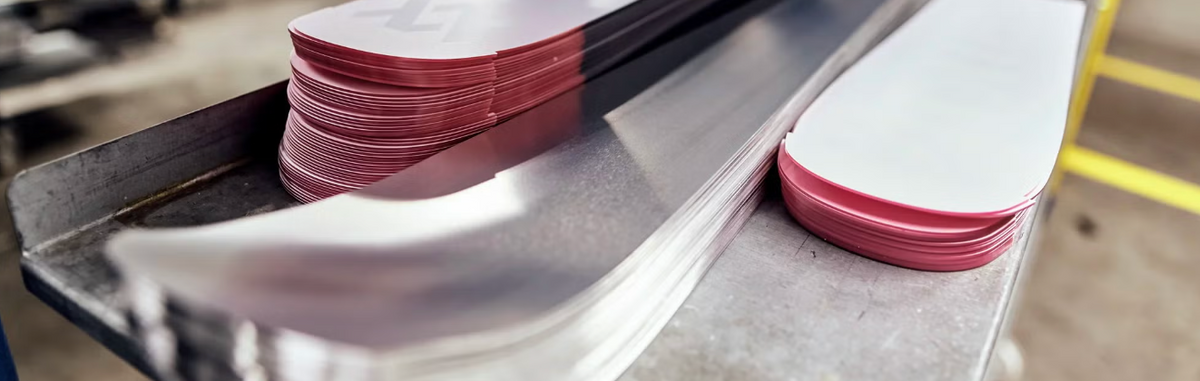
Titanal is a high-strength aluminium alloy that’s used in the construction of some skis and snowboards. A lot of skis that have a titanal in them have the letter ‘Ti’ in their name, which leads some people to think that it refers to titanium. It’s not. Titanium is an exotic metal and isn’t used in skis or snowboards – but it is sometimes used to make solid metal components for premium touring and race bindings.
What is Titanal in Ski and Snowboard Construction And What Does It Do.
How Does Titanal in Skis and Snowboards Influence Performance?
The aim of adding a layer or two of titanal is to absorb vibration and give you a quieter, more planted ride on harsh, hard snow. Titanal’s ability to absorb vibration is called damping.It’s a similar concept to the damping provided to your car by its suspension system – that's why damp skis are sometimes described as having good suspension. In a car you have springs and shock absorbers (which are also known as dampers), in skis titanal (and sometimes rubber) does the same thing.
What Titanal doesn’t do
Titanal doesn’t add stiffness or torsional rigidity to a ski. The titanal sheets that go into a ski or board are actually under 1mm thick and floppy. But what titanal does do is add more mass (weight) to the ski or board – which can also add to the damp feeling and help you effortlessly power through lumps of heavy cruddy snow off piste.
How Titanal is Used
Titanal can be placed throughout a ski in different places and in different ways to give a ski particular performance characteristics. For example, Dynastar’s ‘Rocket Frame’ shaped titanal layer in their M-Pro Ti skis is wide at the rear and middle of the ski, but tapers to a point in the forebody. Skis like those in the K2 Mindbender range concentrate the titanal along the edges. Faction Studio skis have a titanal and rubber stomp plate in the middle of the ski under the binding.
Some skis have a single layer of titanal, which is usually placed under the top sheet – where you can sometimes see the raised outline it makes. Many skis on the New Zealand market have two layers of titanal. Usually one in the base of the ski and one under the top sheet.
But the aim of using titanal in their construction is always the same – to create a quiet, damp ski or snowboard that mutes harsh vibrations to give a quiet, secure feeling to your ride.
A Word About Stiffness and Rigidity
As we mentioned above, titanal sheets are floppy and bendy. Stiffness and torsional rigidity are built into a ski or snowboard by way the wood core is laminated, the choice of timbers used to build the core, how different timber types might be combined, the thickness and length of the sidewall, and the amount of fibreglass cloth and resin used in the laying up process. Laying up describes the layering process used for building up the ski.
Who Are Skis and Snowboards With Titanal Best Suited To?
You would choose a ski or board with titanal if tend to ride groomed slopes with hard or icy snow, or ride off-trail in variable conditions where the snow can be heavy and lumpy. In other words, titanal is great for help to make less than ideal conditions feel a bit better than they actually are.
On the other hand, if you want your skis or board to be as light and nimble as possible and/or you’re only planning to use them in optimal snow conditions, then you might not want or need titanal.
If you’re undecided, the best plan is to visit the snow sports experts at Outside Sports in Queenstown or Wanaka and have a chat about how and where you like to ski. They can then make an expert recommendation on the right ski for you from our big range of skis from the world’s most popular brands – Atomic, Dynastar, Faction, Fischer, Head, K2, Movement, and Rossignol.